Welcome to the NorthWestern Energy website. Please choose a state/region below so we can deliver you the most personalized and relevant site experience possible.
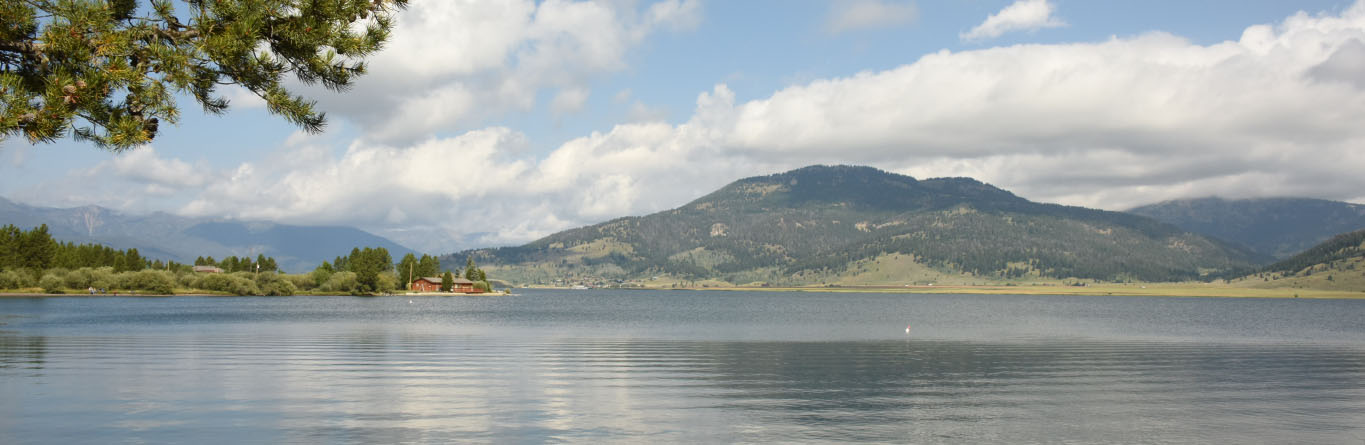
Hebgen is a storage reservoir and provides many benefits, including recreation and fish habitat. It also supports irrigation and electric generation downstream.
Hebgen Dam does not produce energy. We use Hebgen Dam to manage flows downstream for the Madison River fishery and Ennis Lake elevations.
Ennis Lake elevations are controlled by Madison Dam, which produces power. Madison Dam was recently upgraded a 12-megawatt facility, up from 8 megawatts.
2026 Runoff Forecast
May 2026
Snow Water Equivalent (SWE) accumulation this winter has been below normal, resulting in a reduced runoff outlook. The Natural Resources Conservation Service May forecast projects May–July runoff at 225 KAF (50% exceedance) and 210 KAF (70% exceedance).
NorthWestern Energy’s internal forecast is lower at 180 KAF. Forecast can change depending on precipitation, but as for what we know now this is what we anticipate.
Current conditions are tracking similarly to dry years such as 2021, 2016, 2015, and 2007.
Outflows below Hebgen are currently 448 cfs we will continue to have lower than normal outflows from Hebgen until we start seeing the reservoir to fill at a quicker rate.
Near-term precipitation forecasts for the West Yellowstone area indicate limited accumulation until later in the forecast period, with continued uncertainty. Temperatures are currently trending around to below normal, which helps slow runoff.
Managing water temperatures to protect the fishery
Managing water temperatures to protect the fishery
In the summer, we provide pulse flows out of Hebgen Lake into the Madison River below Ennis Lake. Our pulse flow program is designed to maintain lower Madison River temperatures at or below 80 degrees in order to prevent fish mortality caused from elevated water temperatures.
The Madison Thermal Decision Support System (DSS) was developed to protect fisheries and other river resources.
Forecasts and modeling are closely followed by NorthWestern Energy to manage releases to the Madison River downstream and to capture and fill Hebgen Reservoir in the spring.
Limited snowpack and spring precipitation create challenging conditions to fully fill Hebgen reservoir while providing required flows to the Madison River.
Water releases from Hebgen reservoir feed Ennis Reservoir to support pulsed flow releases out of Madison Dam.
The pulse flows are calculated using a model that helps determine the volume of water to be released, allowing for the conservation of water while maintaining safe water temperatures in the lower Madison River.
Low flows directly affect the amount of electricity generated at Madison Dam.
NorthWestern Energy’s stewardship responsibilities of the river resources include balancing the many interests of multiple stakeholders.
The cooperation and flexibility of all help to protect and maintain the long-term health of the river system, which is our priority.
Madison-Hebgen Stakeholder Engagement Process
Our Federal Energy Regulatory Commission (FERC) license outlines how we manage flows in the Madison River and lake elevations at Hebgen and Ennis reservoirs. It specifies flow requirements at several locations on the river and elevation requirements for both Hebgen and Ennis reservoirs. NorthWestern’s goal for managing water in the Madison is to balance the resources relying on the water provided from Hebgen Reservoir including recreation, fisheries, water temperatures and power production downstream all while operating within our FERC license requirements.
However, in drought years, such as 2021, there are times we cannot meet the flow requirements while also maintaining minimum lake elevations. There simply isn't enough water. During these low water times, we work FERC, Montana Fish Wildlife & Parks, the U.S. Forest Service, the U.S. Fish & Wildlife Service and other regulatory agencies to determine the best management for the limited amount of water we have.
In addition to consulting with FERC and the resource agencies, NorthWestern initiated the Madison Stakeholder Engagement Process in summer of 2022. The purpose of the engagement process is to gather and exchange information among those directly affected by river flows and reservoir levels, agencies responsible for fisheries and recreation management, and NorthWestern Energy. The benefit of the process will be a greater understanding of issues and challenges of operating during times of limited water availability.
Stakeholder Engagement Presentations and Documents
NorthWestern works diligently to meet its FERC obligations and is committed to fulfilling its responsibilities at the Hebgen Development. Those responsibilities at Hebgen are numerous and complex.




.jpg 1x)
