Non-communicating meters
How do I read my non-communicating meter?
Click the links below for instructions on how to read your meter, self-read dates and a postcard you can use to submit your meter readings.
Gas meter
Gas meter
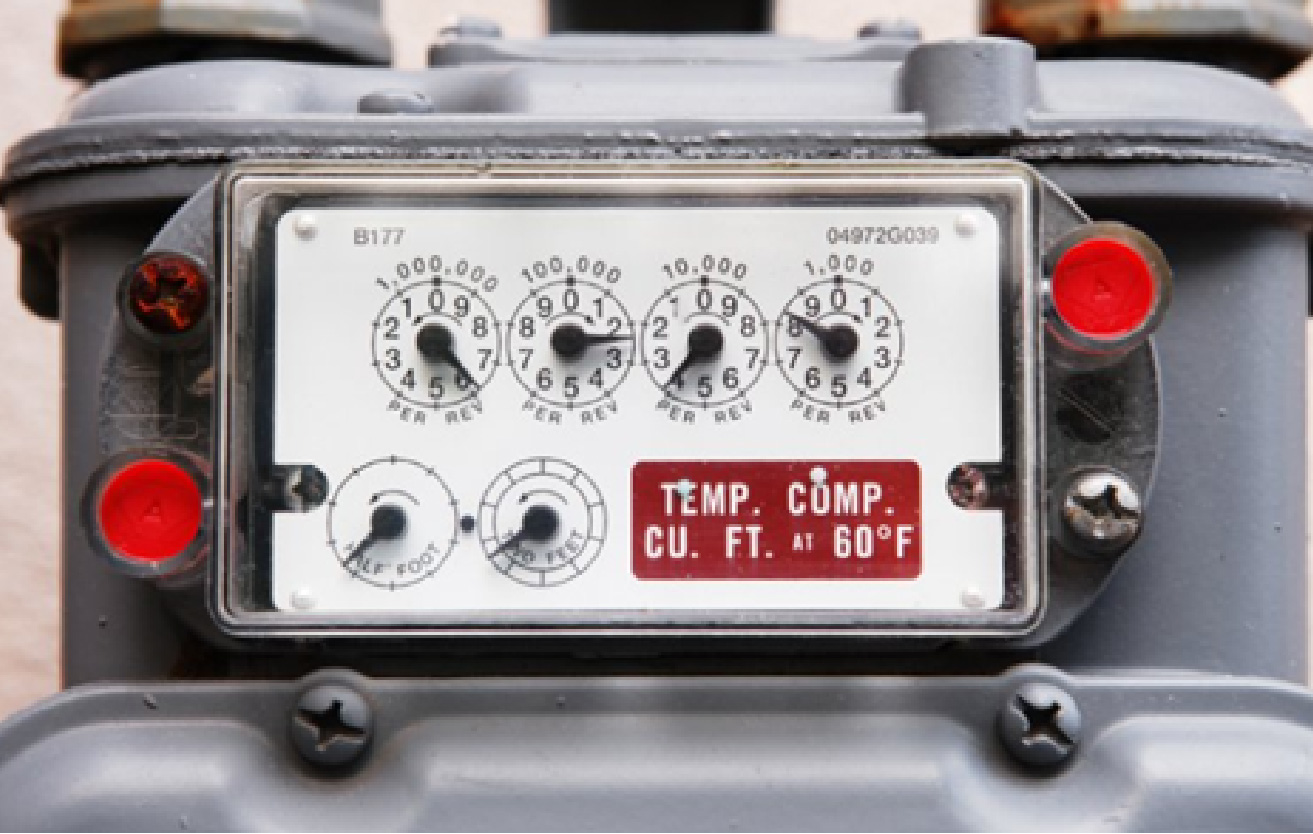
Natural gas dials represent the amount of natural gas measured in volumes of hundreds of cubic feet (ccf).
A gas meter is driven by the force of the moving gas in the pipe, and also turns faster as the flow increases. Each time the dial with the lower value makes one complete revolution, the pointer on the next higher value dial moves ahead one digit.
To read your meter:
- Be at eye level of the dials.
- Mark the dials from left to right.
- Take note of the direction of the arrows on the display – the pointer of adjacent dials turn in opposite directions to each other.
- Draw the pointer on the dials as displayed on your gas meter.
- When the pointer on the dial is between two numbers, record the lower number.
- If the pointer is between 9 and 0, 9 is the lower number.
- When the pointer is directly on the number, look at the dial to its right:
- Has the dial on the right has passed 0, yes, use the number that the pointer is on.
- The dial on the right has not passed "0," use the number less than what the pointer is on.
Example:
In the example below, the reading is: 6 2 3 8
Electric meter
Electric meter
The basic unit of measure of electric power is the watt. One thousand watts is called a kilowatt.
When you use one thousand watts of power in one hour, you have used one kilowatt (kWh).
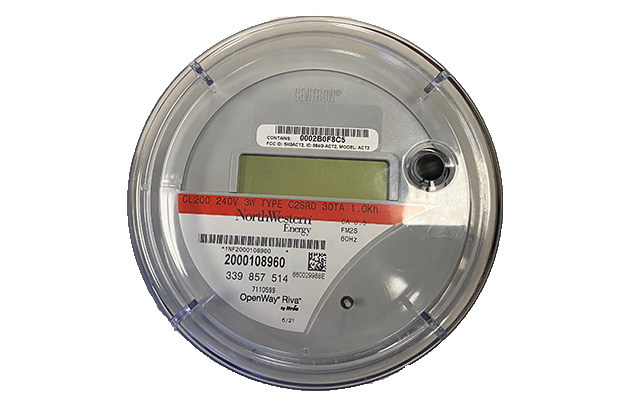
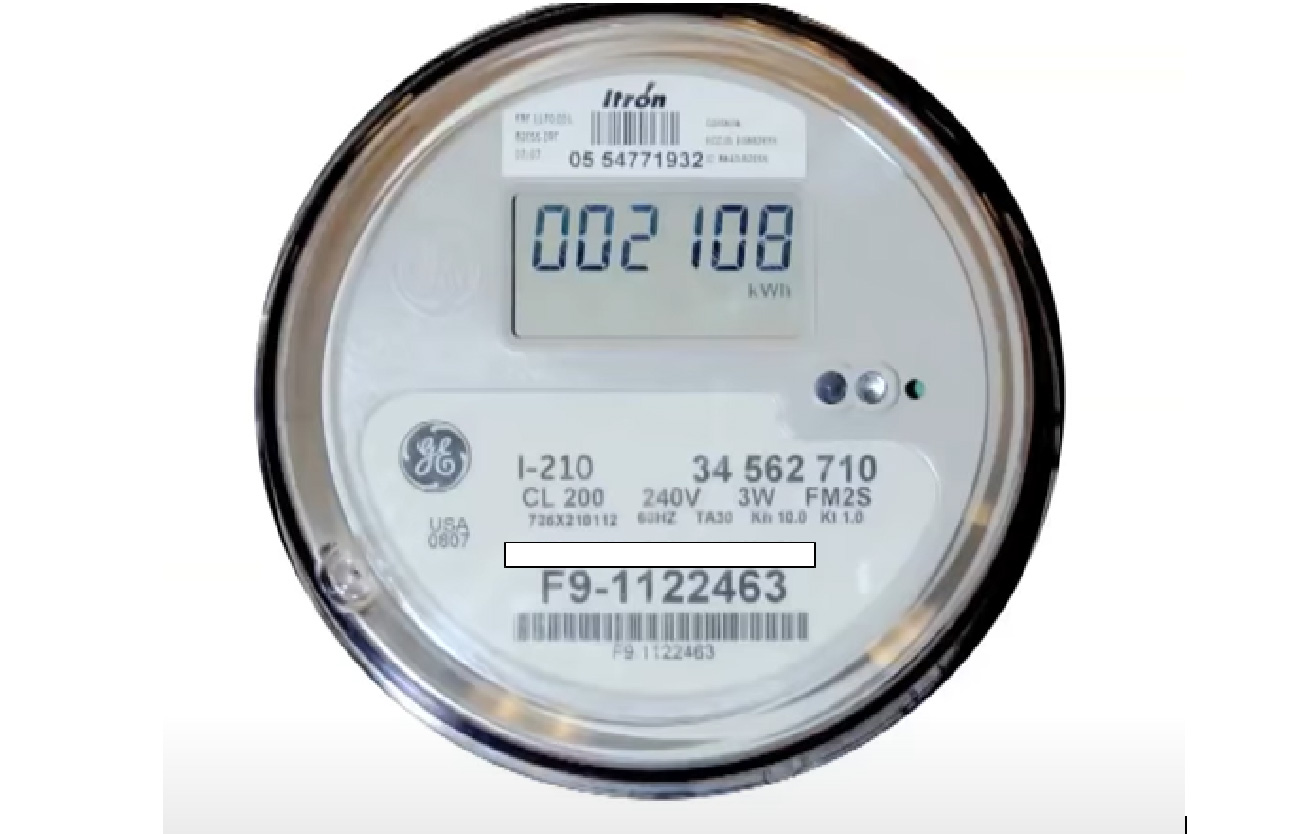
We bill you by the kWh. Your electric meter is a digital meter that has an electronic display that displays the current reading, like a digital clock.
When reading an electric meter, write down the numbers as shown on the meter.
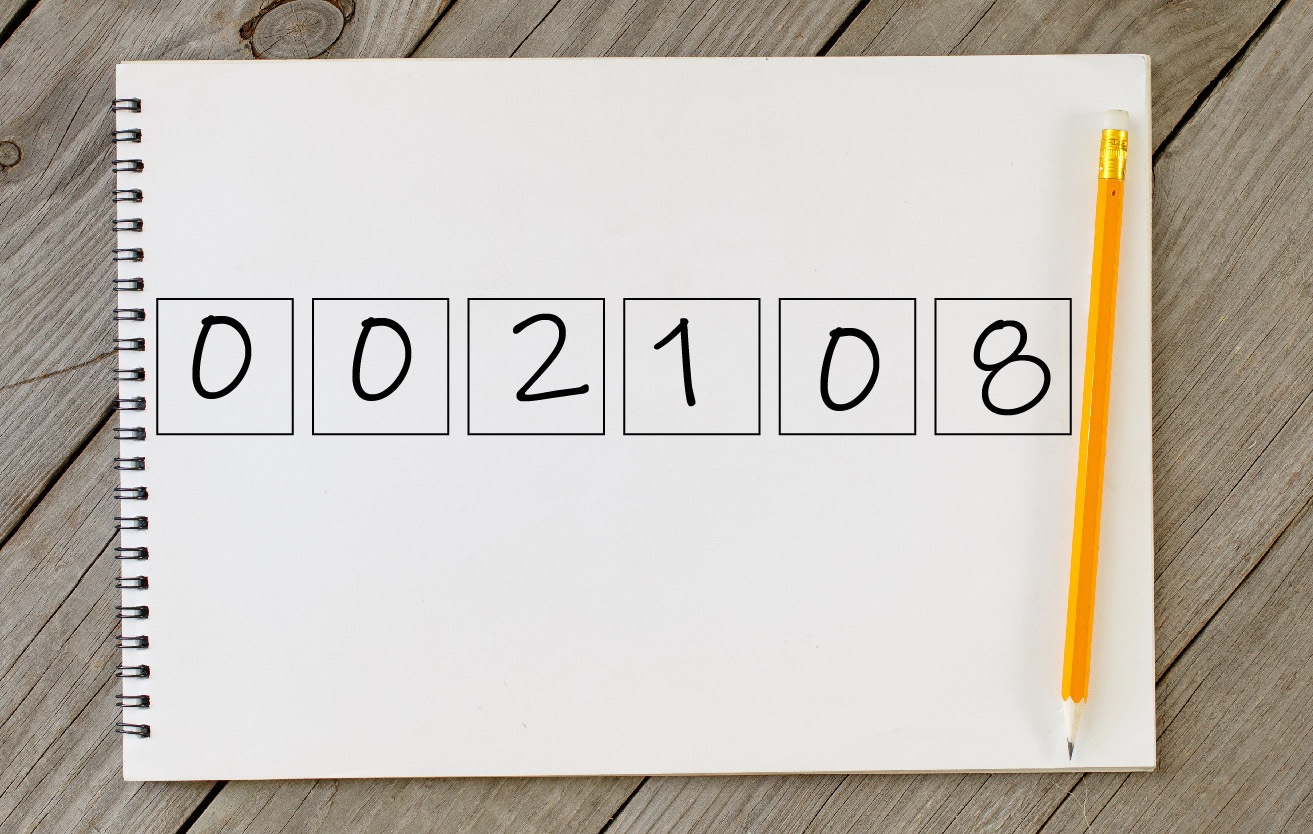
Example:
In the example below, the reading is: 0 0 2 1 0 8
When submitting your meter reads, please be ready with your account number, your service address, your meter read(s) and the date you read your meter(s).
Options to submit your meter reads:
- Submit online in My Energy Account
- Call (888) 467-2669; M-F 7 a.m.-6 p.m.
- Mail the meter reading card to us at:
Communicating meters
How do I read my communicating advanced meter?
Click the links below for instructions on how to read your meter, self-read dates and a postcard you can use to submit your meter readings.
Advanced Meter FAQs
What is the advanced meter project timeline in Montana?
NorthWestern Energy began installation in Montana in 2021. Here is a list of approximate dates for the Montana Meter Upgrade project by area:
- Missoula Division: completed August 2022
- Butte Division: completed June 2022
- Bozeman Division: completed May 2024
- Billings Division: completed October 2024
- Lewistown District: completed October 2024
- Havre District: completed November 2024
- Helena Division: June 2024 – May 2025
- Great Falls Division: August 2024 – May 2025
Will I have to pay for the meter?
Who will change my meter?
NorthWestern Energy contracted with Tru-Check to install the new digital meters, the same company that installed the first generation, one-way communication digital meters in 1998 that are in use today.
Tru-Check technicians will wear apparel with the Tru-Check logo and will carry a NorthWestern Energy contractor identification badge.
When will the meters be installed and do I need to be home?
Most of the installations will occur Monday through Friday during business hours, though there will be cases when evening or weekend installations may be necessary. Customers don't need to be home.
A door hanger will let residents know their upgrade was successful. If the technician cannot perform the upgrade, a door hanger will be left with instructions to call to make an appointment.
If you are both an electric and natural gas NorthWestern Energy customer, the new electric meter will be installed first and the new gas module will be installed during a follow-up visit to your home or business in about eight weeks.
What happens to the meter on my home or business now?
Are radio frequency (RF) emissions coming from the meters and modules?
Yes. The Federal Communications Commission (FCC) regulates the safety limits for all RF emissions, and smart meter and module emissions make up a small portion of the limit. The RF emissions of the one-way communication meters in use now and the two-way communication meters that are being installed for this technology upgrade are both approved by the FCC. Radio frequency emissions are also produced by common household devices such as microwaves, baby monitors and TVs.
Is customer information protected?
Yes. Customer privacy and security are NorthWestern Energy priorities. The company’s strict security standards have contributed to protecting the energy grid and customer privacy for years. The meters do not collect, store or transmit any personally identifiable information.
The meters measure total energy and cannot differentiate energy usage by appliance or anything else within a home or business. The transmitted energy use information is encrypted.What if I don’t want an upgraded meter?
Customers who want to keep their existing meters can call NorthWestern at 888-467-2669 or email NorthWesternEnergyMeters@northwestern.com to be added to the bypass list. Customers who previously requested an opt out do not need to contact NorthWestern again to be bypassed and keep their meters.
NorthWestern will be reaching out to customers who received an advanced meter despite their request to opt out. For those who still wish to opt-out, NorthWestern will ensure that the advanced meter is removed and replaced with a meter similar to the one that was there before. Customers will not be charged for this service.
Customers who have questions about the advanced meter opt-out program can contact NorthWestern at 888-467-2669
or the Montana Public Service Commission at 1-800-646-6150 or pschelp@mt.gov.
Reliability First, Opportunity Ahead
Date: Dec 5, 2025
TYPE: News
By Brian Bird, President & CEO, NorthWestern Energy
On Jan. 1, NorthWestern Energy will take a decisive step to secure our state’s energy future. Our ownership in Montana’s Colstrip Plant will increase from 15% to 55%. We are guided by a singular responsibility -- to meet our obligation to provide reliable, cost-effective energy service for our customers.
This plan has been in the works for three years.
Today NorthWestern Energy owns 222 megawatts of the Colstrip Plant, on-demand generation that keeps the lights on, cost effectively, for Montana families and businesses in all weather conditions. The Colstrip Plant is a critical piece of the portfolio of generation resources serving our Montana customers – a portfolio with more than 58% wind, solar and hydro generation today.
In early 2023, NorthWestern Energy announced plans to acquire an additional share of the Colstrip Plant from Washington-based Avista, to provide our Montana customers with a more balanced mix of energy resources.
In July 2024, we announced plans to acquire another share of the Colstrip Plant from Washington-based Puget Sound Energy.
Washington state law requires Avista and Puget Sound Energy to exit the Colstrip Plant on Dec. 31. In Montana, the plant’s on-demand generation remains essential to keeping the lights on and homes warm in our state at reasonable rates.
With 55% majority ownership, we can protect this critical resource from premature closure driven by out-of-state interests. We will guide operational investments so the plant continues to deliver cost-effective, around-the-clock energy for Montana communities.
Montana customers have depended on unpredictable energy markets for supply, mostly from out of state, to meet peak energy demand for too long. When temperatures plunge and the demand for electricity spikes, market prices can soar – and supply can be scarce.
For decades, energy service providers in Montana owned power generation facilities to supply electricity to their customers. In 1997, the state deregulated the energy generation industry, ending that long-standing policy. However, deregulation failed and resulted in higher energy costs for Montanans. In response, lawmakers changed state law in 2007 to allow energy service providers to once again own power generation facilities and serve their customers directly.
Over the last 18 years, NorthWestern Energy has added nearly 1,100 megawatts of power generation to serve our Montana customers. More than half of this comes from renewable wind and hydro generation.
When the wind isn’t blowing and the sun isn’t shining, Colstrip is there. This acquisition strengthens our generation portfolio and reinforces a stable energy backbone for Montana.
The added capacity from Avista’s and Puget Sound Energy’s shares of Colstrip come at no purchase price, avoiding the enormous expense of building or buying a similar resource.
This is responsible progress.
We’re committed to a cleaner energy future, but you don’t tear down one bridge until another is built. The Colstrip Plant will keep the lights on in Montana in all weather conditions as we safely and cost-effectively transition to new carbon-free technologies.
This acquisition also opens the door to new opportunities.
Montana is attracting interest from the data center industry. With expanded generation capacity, NorthWestern Energy is positioned to support that economic opportunity in Montana while existing customers are protected.
Generation from the Puget Sound Energy share of the Colstrip Plant isn’t needed in the near term to serve our Montana customers’ energy demand –the cost of operations and maintenance of this share will not be included in customer rates. However, acquiring the Puget Sound Energy share means we gain majority ownership of the plant and the flexibility to serve future energy growth in Montana.
Our priority is reliable, affordable energy for Montana families and businesses. We’re working collaboratively with stakeholders on a plan that supports economic development while protecting the interests of all Montanans. Together, we are building an energy strategy that strengthens our communities and secures long-term prosperity.
This is more than an energy transaction. It’s a promise to Montana. By securing the Colstrip Plant’s capacity today, we’re safeguarding reliability during the harshest weather—and creating space for tomorrow’s opportunities.
Reliability comes first. And with this acquisition, Montana can move forward with confidence -- toward an energy future that is both secure and prosperous.